- How to store hazelnut chocolate?
- Choose a cool, dry place: avoid the refrigerator (far too humid) and remember that the ideal temperature is between 15 and 18 °C.
- Where does hazelnut come from?
- Hazelnut chocolate was invented near Lausanne, Switzerland, by a visionary chocolatier.
- What to drink with hazelnut chocolate?
- An aromatic non-alcoholic beer.
- A herbal, alcohol-free gin.
Author: Viet Hong Pham
-
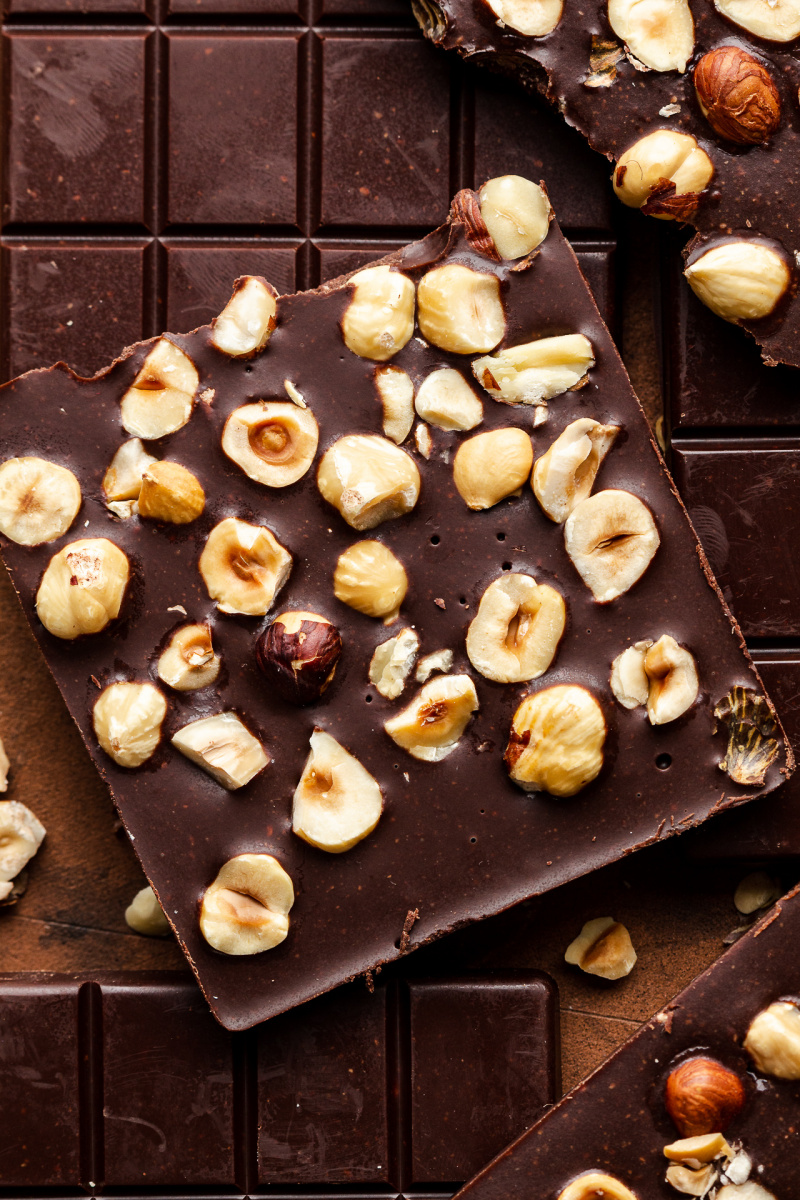
Things you didn’t know about hazelnut chocolate
-
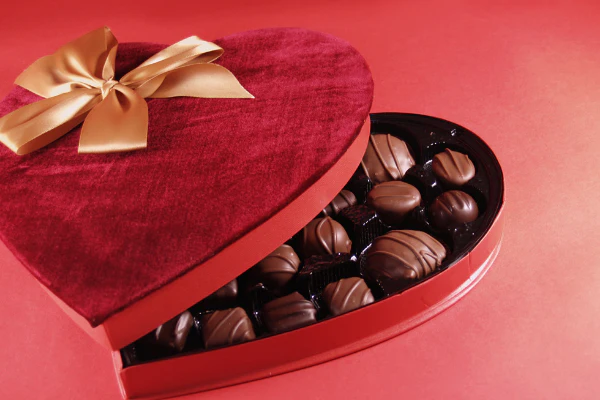
Valentine Day
Valentine’s Day: Why We Gift Chocolate
Ever wonder why February 14th and chocolate are inseparable? It’s not just a sugar rush—it’s a tradition centuries in the making.
From Ancient Brews to Romantic Boxes
Long before it was a sweet treat, the Aztecs and Mayans valued cocoa as a “gift from the gods.” However, the modern tradition really took off in 1861 when Richard Cadbury created the first heart-shaped chocolate box. He designed them so beautifully that people kept the boxes to store love letters long after the chocolates were eaten!
Who Gives What?
While in the West it’s common for anyone to gift chocolate to their partner, other cultures have unique “rules”:
- In Japan & South Korea: On February 14th, women give chocolates to men. They even have “Giri-choco” (obligation chocolate) for coworkers and “Honmei-choco” for true loves.
- The Return: Exactly one month later, on March 14th (White Day), the men are expected to return the favor with white chocolate or gifts!
Fun Fact
In 1907, Milton Hershey launched a new tear-drop shaped treat called Hershey’s Kisses. They got their name not from romance, but from the “smooching” sound the machines made as they plopped the chocolate onto the conveyor belt!
Make it Meaningful
Today, gifting chocolate is the ultimate way to say, “You’re special.” Whether it’s a box of artisanal truffles or a rich dark chocolate bar with roasted hazelnuts, celebrate this Valentine’s Day with something handcrafted and sweet!
-
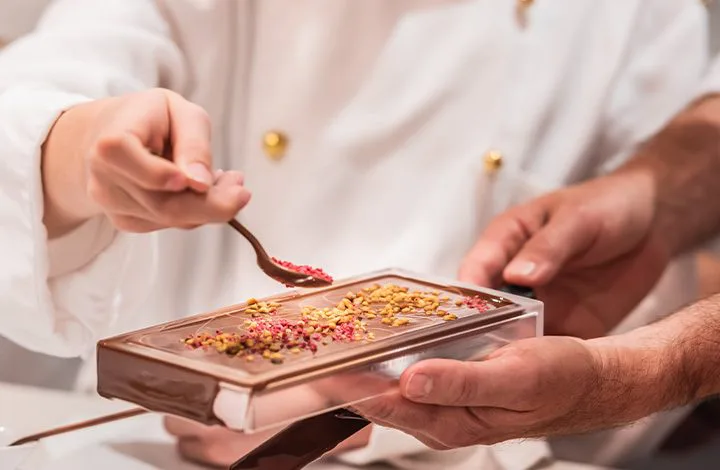
How is chocolate made?
Ever wonder how a bitter-tasting bean from a tropical tree transforms into a smooth, melting piece of chocolate? It’s a complex process that combines science with culinary art.
1. The Harvest
It all starts with the Theobroma Cacao tree. Large colorful pods grow directly on the trunk. Inside these pods are the cocoa beans, surrounded by a sweet, white pulp.
2. Fermentation & Drying
The beans are scooped out and placed in wooden boxes to ferment for about a week. This is where the chocolate flavor actually develops! After fermentation, they are spread out in the sun to dry.
3. Roasting & Winnowing
The dried beans are roasted in large ovens to bring out the rich, nutty notes. The shells are then cracked open (winnowing) to reveal the “nibs”—the crunchy heart of the cocoa bean.
4. Grinding & Conching
The nibs are ground into a thick liquid called chocolate liquor (don’t worry, it’s non-alcoholic!). This is mixed with sugar and milk powder. The mixture is then “conched”—kneaded by heavy rollers for hours (or even days) to make it perfectly smooth.
5. Tempering
To get that satisfying “snap” and a glossy shine, the chocolate is carefully cooled and reheated. This is called tempering. Without it, your chocolate would be soft and dull.
💡 Fun Fact
It takes approximately 400 cocoa beans to make just one pound (450g) of chocolate. Every bite is a concentrated burst of nature!
